In 2026, launching a SaaS in Belgium has never been more accessible. The tools are mature, infrastructure costs have dropped, and the Belgian market offers an ideal framework to validate a product before scaling across Europe. You just need to follow the right steps and avoid the classic traps.
Belgium combines a compact test market, a multilingual ecosystem (FR/NL/EN) and direct access to 450 million European consumers. It's one of the best grounds to validate a SaaS before tackling larger markets.
Why Belgium is a great place to launch a SaaS
Many founders look to the United States or France. Yet Belgium offers structural advantages that are often underestimated for a SaaS launch.
A compact and representative test market
With 11 million inhabitants, three official languages and a diversified economy, Belgium is a natural laboratory for testing a product. If your SaaS works here, it has a strong chance of working in France, the Netherlands or Germany. The market is small enough to iterate fast, but structured enough to validate a real business model.
Direct access to the European market
Brussels is the center of the European Union. Being based in Belgium makes GDPR compliance easier, opens access to European public contracts and boosts credibility with international B2B clients. For a SaaS targeting Europe, it's a strategic starting point.
A solid funding ecosystem
Between business vouchers in Wallonia, digitalization grants in Brussels, incubators (WSL, Leansquare, Start it @KBC) and local investment funds, funding options are plentiful. Many founders don't realize they can cover a significant portion of their MVP budget through public grants.
Key steps to launch a SaaS
1. Problem and demand validation
Before writing a single line of code, you need to validate that the problem actually exists and that people are willing to pay to solve it. Concretely:
- Interview 15 to 20 potential prospects (not friends).
- Identify a specific segment with a recurring, measurable problem.
- Test willingness to pay: landing page + interest form or pre-registration.
- Analyze the competition: if there are zero competitors, that's often a negative signal.
2. Build an MVP that makes sense
The MVP (Minimum Viable Product) is not a sloppy prototype. It's the simplest version of your product that solves the main problem reliably. The goal: get the product into the hands of real users as quickly as possible.
A solid SaaS MVP can be built in 4 to 8 weeks: functional scoping, UX/UI design, development, testing and deployment. You don't need 6 months of development to validate a market hypothesis.
3. Finding product-market fit
Product-market fit is the moment when your SaaS starts selling without forcing it. The concrete indicators:
- A monthly retention rate above 85%.
- Users recommending the product spontaneously.
- A customer acquisition cost (CAC) that decreases over time.
- Feature requests converging toward the same need.
4. Scale with method
Once product-market fit is confirmed, it's time to invest in acquisition, automation and infrastructure. Not before. Scaling too early is the most expensive mistake in the SaaS world.
Recommended tech stack in 2026
For a B2B SaaS launched in Belgium, here is a proven stack that balances development speed, cost and scalability:
- Frontend: Next.js (React) for SEO, performance and flexibility.
- Backend / Database: Supabase (managed PostgreSQL) with built-in auth, storage and real-time API.
- Payments: Stripe for recurring billing, free trials and European compliance.
- Hosting: Vercel for the frontend, with global CDN and automatic deployment.
- Email: Resend or Postmark for transactional emails.
- Analytics: Plausible or PostHog to stay GDPR-compliant.
This stack allows you to launch a functional SaaS in a few weeks, with infrastructure costs close to zero at launch (most of these services have generous free tiers).
Realistic budget for a SaaS MVP
The budget depends on functional complexity, but here are realistic ranges for a professional SaaS MVP in Belgium:
- Simple SaaS (1 core feature, auth, basic dashboard): 5,000 to 8,000 EUR.
- Intermediate SaaS (multi-role, third-party integrations, Stripe billing): 8,000 to 12,000 EUR.
- Advanced SaaS (complex workflows, AI, public API, multi-tenant): 12,000 to 15,000 EUR and beyond.
These budgets cover scoping, UX/UI design, development, testing and deployment. They do not include marketing, content or post-launch maintenance.
Available grants in Belgium
Business vouchers (Wallonia)
Business vouchers can cover up to 75% of the cost of strategic or technological support. A website or application project can be partially funded through "digital transformation" vouchers. The ceiling varies by voucher type but can reach several thousand euros.
Digitalization grants (Brussels)
The Brussels-Capital Region offers grants for SMEs investing in digital. Amounts and conditions evolve, but the support can cover part of MVP development or a digital platform.
Incubators and acceleration programs
Organizations like WSL Incubation, Leansquare, Start it @KBC or Co.Station offer mentoring, networking and sometimes funding in exchange for a minority stake or for free. It's a concrete lever for a founder launching their first SaaS.
Classic mistakes to avoid
Over-engineering the product
The most common trap: spending 6 months building a "perfect" product with 40 features, without ever confronting it with the market. An MVP should solve a problem, not impress developers. Every feature not directly tied to the core value proposition is noise.
Ignoring market validation
Building a product because you have the "idea of the century" without talking to a single prospect is the recipe for failure. Market validation is not optional; it's the most profitable step in the process.
Underestimating design and user experience
An ugly or confusing SaaS won't convert, even if the technology is solid. In 2026, users instantly compare your interface with high standards (Notion, Linear, Stripe). Investing in UX/UI design from the MVP stage is not a luxury; it's a conversion and retention factor.
Neglecting pricing from the start
Many founders postpone the pricing question. That's a mistake. Pricing is part of the product. Test a pricing model from the first weeks: it's the best indicator of perceived value.
Concrete results: BillyCheck and ChairSplit
At P-XEL, we designed, developed and launched two SaaS products in production. These are not mockups; they are products running with real users.
BillyCheck
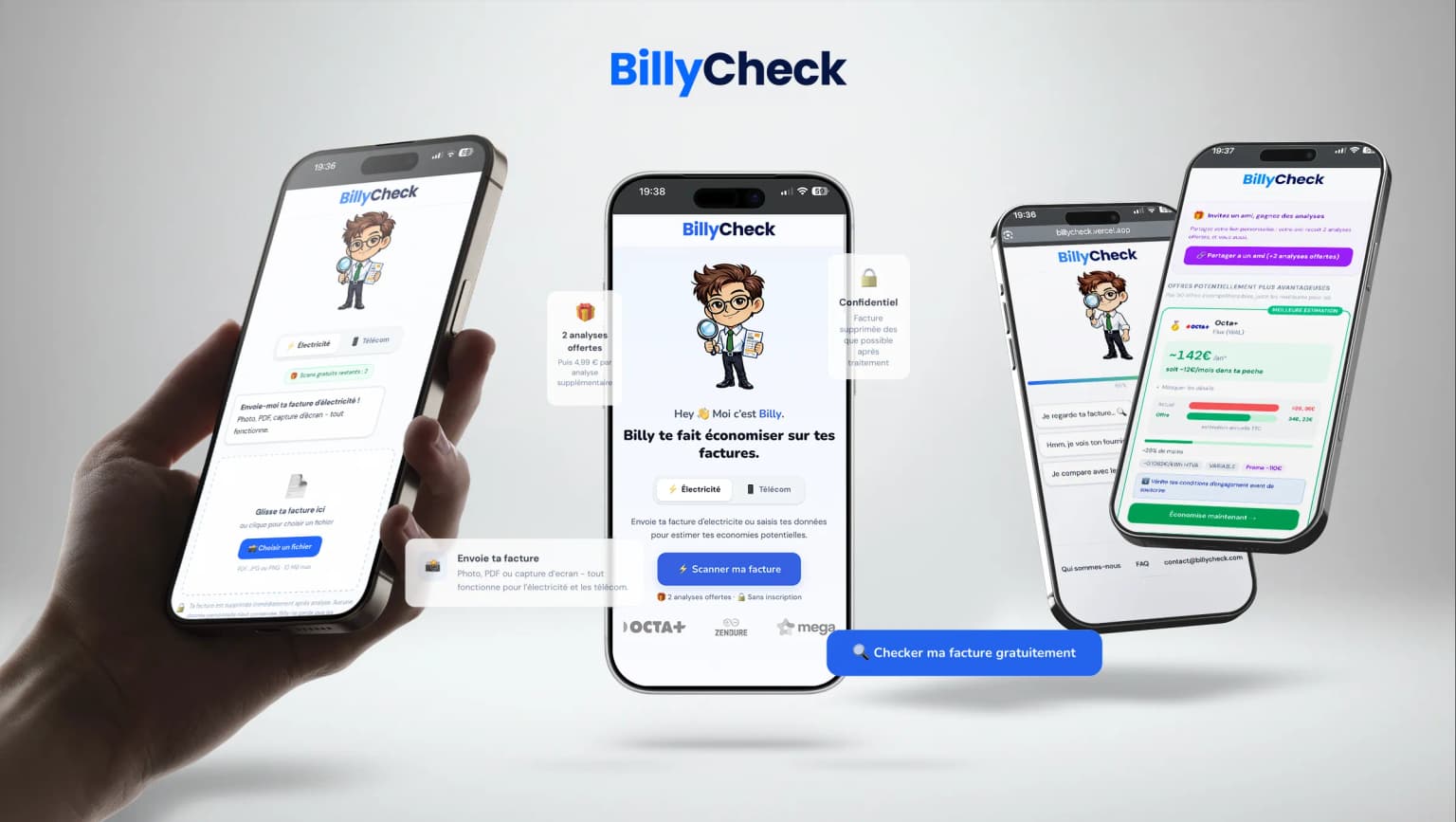
BillyCheck is an automated invoice verification SaaS. The product allows SMEs to scan their invoices and automatically detect errors, duplicates and inconsistencies. Built with Next.js and Supabase, it went from concept to first user in under 6 weeks. The design was built for immediate adoption: clean interface, 2-minute onboarding, visible results from the first scan.
ChairSplit
ChairSplit is a booking and seat-sharing platform for coworking spaces and hair salons. The SaaS handles time slots, payments and communication between owners and tenants. Developed with the same stack (Next.js, Supabase, Stripe), it illustrates how a well-scoped MVP can tackle a niche market with a controlled budget.
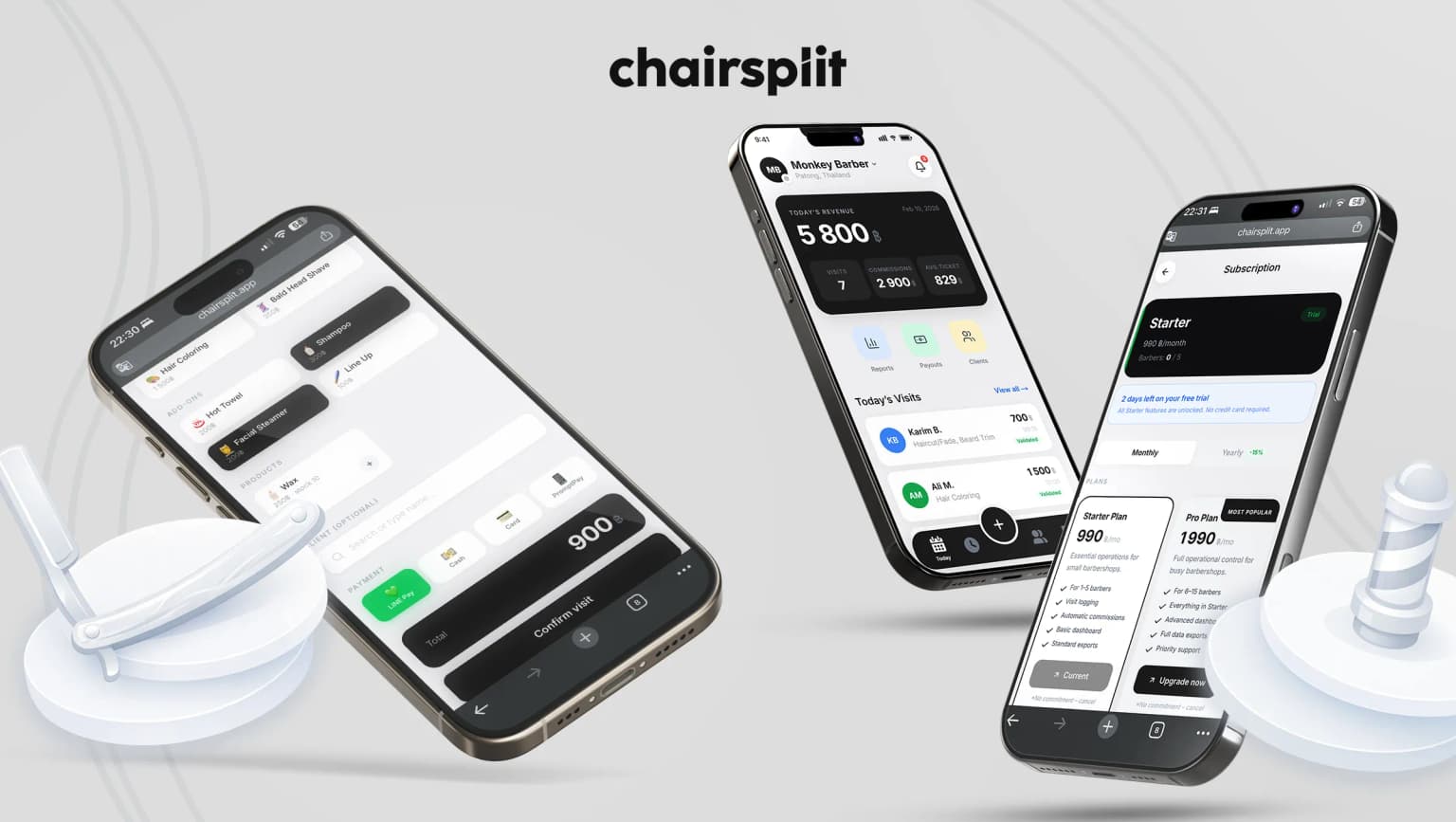
These two products share one thing in common: tight scoping, usage-focused design and a fast launch. No months of specifications, no steering committees, no useless features. Real product, shipped.
P-XEL can launch your SaaS
P-XEL is not an agency that makes mockups. It's a product studio that designs, develops and ships SaaS products in production. We launched two SaaS products with real users, real payments and real feedback.
If you have a SaaS idea, a validated problem or a prototype to turn into a product, we can go from concept to launch in a few weeks. Scoping, UX/UI, development, deployment: everything is integrated.
Have a SaaS project? Book a strategic call and we'll evaluate the feasibility, budget and timeline together. No fluff, just substance.